// creative · ongoing
Avalor
Self-directed geospatial modeling — QGIS, tectonic logic, climate systems
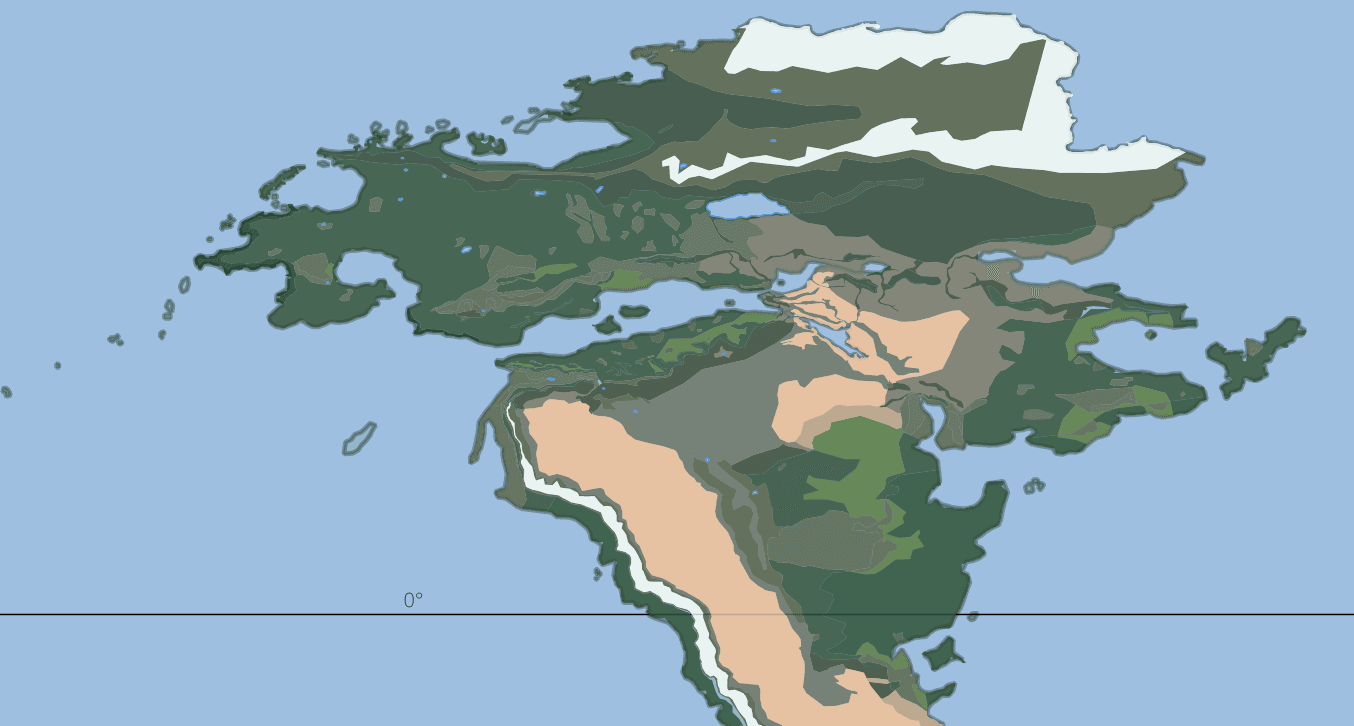
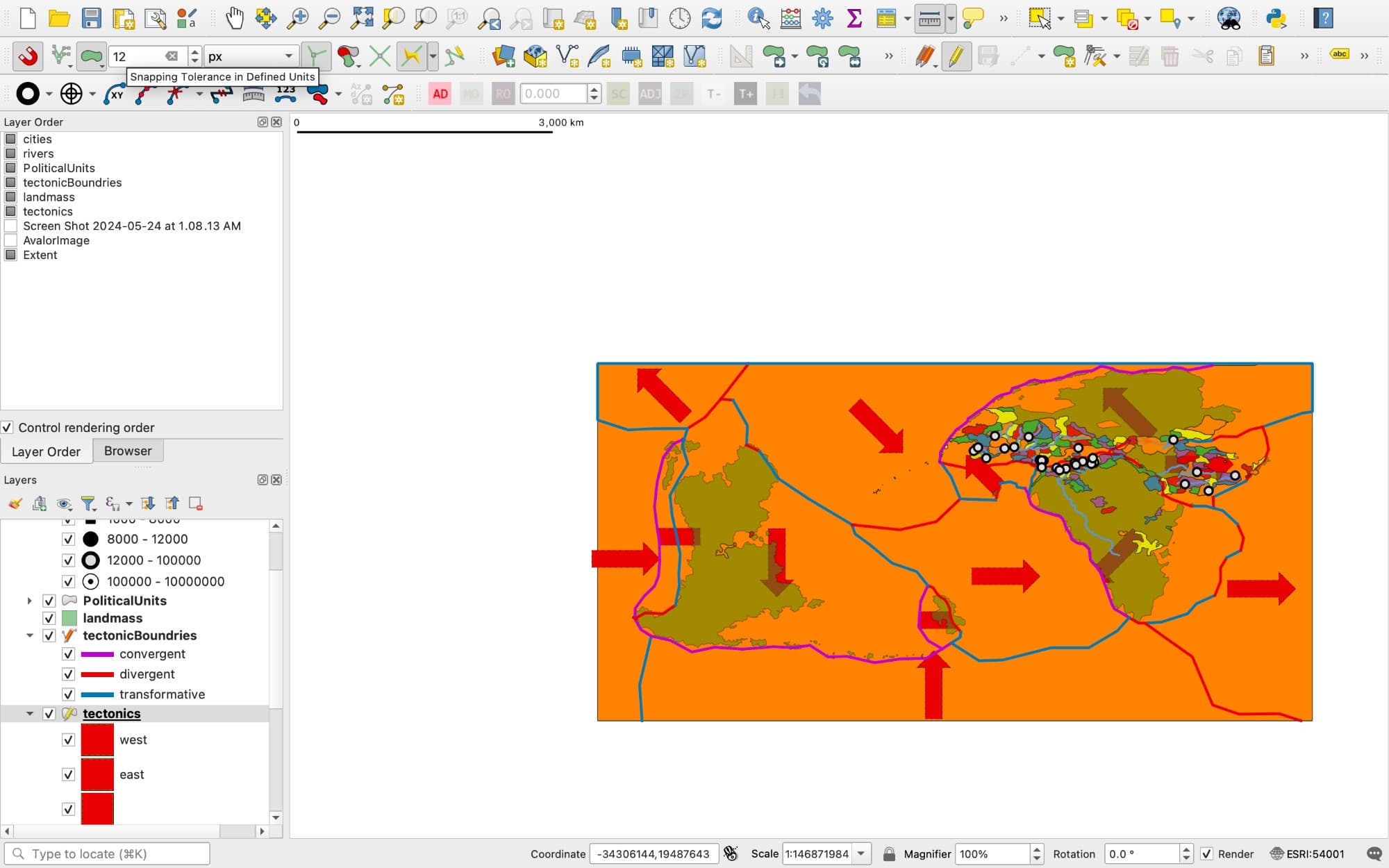
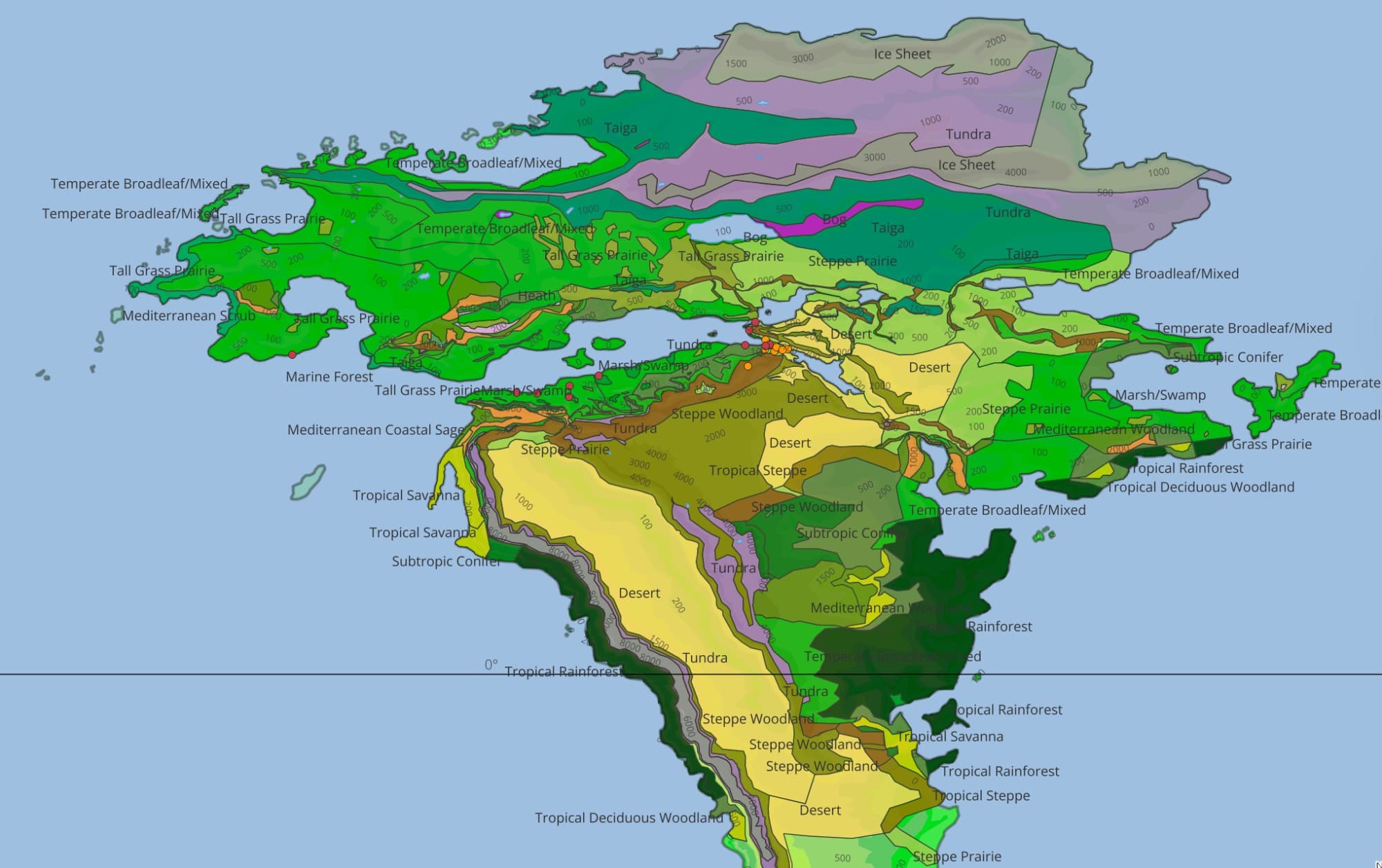
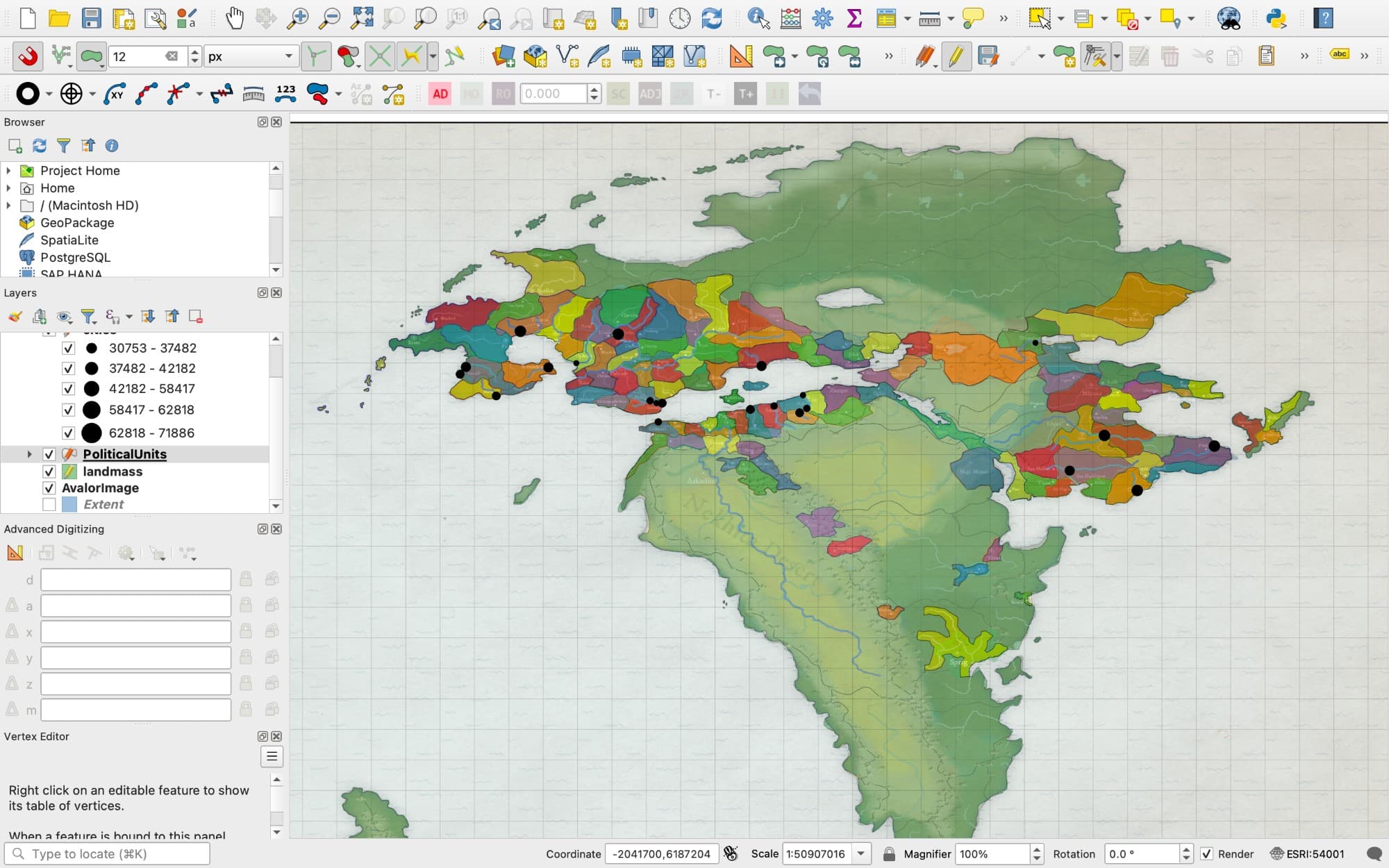
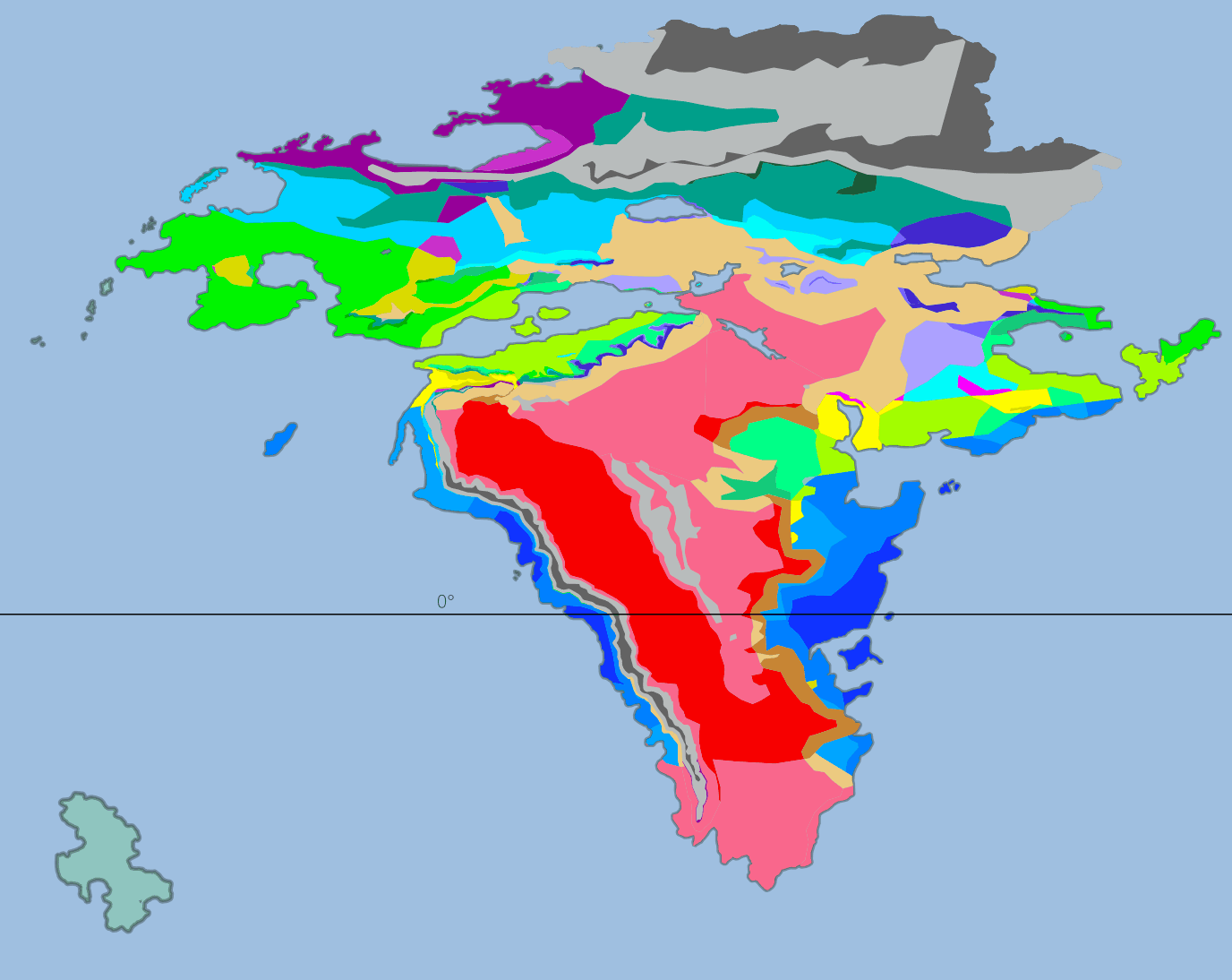
A personal project I used to learn QGIS. I followed Artifexian and Worldpastaas guides on geospatial and systems-based world design, applying each concept in QGIS as I went — tectonic logic, atmospheric circulation, hydrology, and biome placement.
What I Learned
The main thing was understanding how geographic layers constrain each other. Tectonics determine where mountains go. Mountains determine where precipitation falls. Precipitation determines where rivers form and where vegetation grows. I hadn't thought about those dependencies in much detail before — working through the guides and trying to apply them in QGIS made them concrete.
QGIS itself was new to me. Learning to structure a project as stacked layers — each one derived from or constrained by the ones beneath it — was the main technical skill. Vector and raster modeling, coordinate systems, spatial reasoning at a continental scale.
The climate modeling was the steepest learning curve — Hadley cells, orographic uplift, rain shadows, trade winds. Most of it was new to me and ended up being applicable outside of the project.
How I Applied It — QGIS Layer Stack
I structured the project as a strict dependency stack — each layer only placed after the ones beneath it were settled:
// layer dependencies (each derived from the one above)
- 01Tectonic plates (vector polygons)
- 02Fault lines (vector lines)
- 03Mountain ranges (derived from convergence zones)
- 04Elevation raster
- 05Watersheds
- 06Major river systems
- 07Coastlines
- 08Climate bands
- 09Biome overlays
- 10Political regions
Following that order strictly is most of what the guides teach — letting each layer constrain the next, and seeing what the system produces before making any aesthetic decisions on top. There's a lot of room to experiment within that structure too: adjusting atmospheric parameters or tectonic geometry and watching how the downstream layers shift is a good way to learn how the pieces connect.
// full lore compendium
Read the AvadexFull worldbuilding reference — mythology, nations, magic, history